
Pitt County Court Calendars Explained
No single permanent list holds every Pitt County court date. The tools split the work. North Carolina eCourts Portal Search Hearings answers the current hearing lookup. Start from a case number or a narrowed name. For a session or courtroom view, the Judicial Branch turns to its statewide Court Dates service. It links separate Pitt County civil and criminal calendars. A Case Summary adds the case history around a setting. When an appearance is close, none of these replaces a direct check.
One clerk structure serves both courts. It handles Superior and District Court files in Pitt County. A felony, misdemeanor, family matter, civil case, or infraction may sit on a different calendar. The Pitt County Clerk of Superior Court still holds the record itself. A setting tells you when and where the court expects to call a matter. That is all it tells you. It does not prove the case ended or that a hearing happened. An old notice may no longer control.
North Carolina Court Dates is the official page behind this Pitt County court dates reference.
The state entry point sends you toward county calendars, closures, and missed-date guidance. Still match any Pitt County setting to the assigned court and the newest notice.
Pitt County Court Calendar Channels
Each Pitt County court calendar channel answers a different question. Search Hearings suits a current location and time. For official session views, the Pitt civil calendar and Pitt criminal calendar give county-filtered listings. Smart Search opens the Case Summary. There, Hearings and Case Events show whether a Pitt County court date was followed by a reset, continuance, dismissal, or disposition.
The clerk and court offices confirm the next step. They step in when the online record leaves it unclear. The court offers no text-message or email reminder program for Pitt County. Assume none. Portal also does not say whether a hearing is virtual or in person. If a virtual appearance is authorized, the court supplies the connection information separately, outside Portal.
Finding Your Court Date
A Pitt County court date search goes fastest with the full case number. Portal can also search a precise name. Begin with the current online hearing record. Then pull the calendar that matches the case type. If a Pitt County calendar result looks surprising, sits close in time, or lacks a location, work the direct confirmation ladder with the clerk.
- Open eCourts Portal, choose Smart Search, and search the Pitt County case number. Read both Hearings and the latest Case Events.
- Use Search Hearings with the case number. If it is unavailable, use a precise party name and narrow the results to Pitt County, a courtroom, or a judicial officer.
- Check the official Pitt County civil or criminal calendar for the session-style listing that fits the matter. A civil search and a criminal search are separate county calendar channels.
- When the setting remains unclear, call the Pitt County Clerk of Superior Court at 252-695-7100. The Superior Court judges' office is 252-695-7260, the District Court judges' office is 252-695-7270, and Family Court Administration is 252-695-7287.
- Keep the original court notice and compare it with any later notice or Case Event. For a Pitt County court date, the newest court direction controls over a copied result or an older calendar entry.
Farmville matters add a location check. Farmville is a Pitt County court location inside the unified state system, not a separate municipal court docket. Search Pitt County in Portal first. Then confirm the assigned site before you treat a Greenville or Farmville listing as the right place to appear.
Pitt County Court Date Search Fields
You can narrow a Pitt County hearing search without guessing at a docket code. The Judicial Branch says Search Hearings accepts several kinds of identifying information. It returns a current calendar location and time. A case number is usually the cleanest start. Searching by courtroom and date can show calling order. Courts and judges call cases differently.
| Portal field | Use for a Pitt County court date | Important limit |
|---|---|---|
| Case Number | Find a current hearing tied to a known file. | Use the complete number when available. |
| Party or Business Name | Locate a hearing when a file number is not at hand. | Narrow broad results to Pitt County before relying on them. |
| Attorney Name or Bar Number | Find hearings associated with a listed attorney. | It is a hearing criterion, not proof of representation. |
| Judicial Officer or Courtroom | Review current calendar location and calling order. | Portal does not label a setting virtual or in person. |
Pitt County court dates can move after a search. Portal columns can be sorted, but a sorted list is still a snapshot. Open the matching Case Summary, and use the county calendar or court office for a same-day confirmation.
How to Read a Court Setting
Read a Pitt County court setting as a set of fields, not just a date. The date and time tell when the court plans to call the matter. The courtroom or location shows where the setting sits. Judicial officer or assignment information adds court context. The setting type matters. It separates a routine proceeding from a trial session, motion, or conference. A later Case Event can change what each field means.
| Date | The scheduled Pitt County calendar date. Compare it with later Case Events before relying on it. |
|---|---|
| Time | The listed start or calling time. A converted older event may show 12:00 AM as a migration artifact, not a real hearing time. |
| Courtroom or location | The current hearing location returned by Portal. Confirm which Pitt County site or courtroom applies. |
| Judicial officer | A searchable hearing field that helps identify the court assignment, not a substitute for the court's instruction. |
| Setting type | The kind of proceeding shown by the calendar or Case Event, such as a motion, trial calendar, conference, or hearing. |
Portal's Case Summary puts scheduled or completed settings under Hearings when data exists. Case Events holds the dated procedural history. Read both panels together on Pitt County court dates to separate a past event from the next scheduled appearance.
Pitt County Court Calendar Terms
Pitt County court calendar labels do different jobs. Local civil rules distinguish a scheduling calendar, an initial calendar, and a final trial calendar. Portal adds its own Case Events and Search Hearings labels. Read the full label. Do not treat a tentative or past entry as a final command to appear.
- Search Hearings
- Portal's current hearing lookup, not a permanent substitute for the Case Summary history.
- Case Events
- The chronological Register of Actions entries that can show a continuance, reset, notice, or disposition.
- Scheduling calendar
- Under Pitt County civil Superior Court rules, a list used to set tentative future trial calendars.
- Final trial calendar
- The session list distributed by the Trial Court Administrator, generally ordered oldest first subject to priorities and peremptory settings.
- Continuance
- A postponement to a later time. Party agreement alone does not make it automatic in Pitt County.
Calendar labels in Pitt County only tell you the kind of listing. Pair the label with the case number and the assignment before drawing conclusions. What actually decides your next step is the latest court notice plus current hearing information from the court itself.
Continuances, Resets, and Cancellations
Pitt County court dates move for many reasons. A case may be continued, reset, dropped from a session, or settled before the listed hearing happens. Pitt's criminal-continuance order for District Court sets a rule. Every continuance order must state its source or reason and count the prior continuances. The local action plan adds target timelines. Probable-cause matters should reach plea or indictment in six months. Misdemeanors carry a six-month target. DWI matters get twelve months, and infractions get 120 days. Beyond those ranges, good cause or legal authority still applies.
Civil Superior practice keeps its own rhythm. The posted Pitt County local rules centralize the work. Calendaring of motions and trials, additions, and continuances goes to the Trial Court Administrator. Written continuance requests must arrive before the session. The cutoff is the pretrial settlement conference at the latest, never less than ten days before the session. The paper should name the caption or file number. It should also state the session, the reasons, the prior continuances, and each side's position. Emergencies go straight to the administrator or the judges instead.
One caution: a Pitt County court date can change after the first calendar posts. Do not rely on a single listing. Compare the final calendar, Case Events, and any later notice.
Pitt County Superior Civil Calendar Rules
An early date in Pitt County civil court rarely becomes the trial date. The posted local rules explain why. Cases ready for trial go on a ready docket. That turns on local criteria. A calendar conference comes next. From it the court publishes an initial calendar. The final trial calendar is a separate, later session list. An early entry on a court calendar is therefore provisional by design.
Motions and trial calendaring sit with the Trial Court Administrator. The Clerk also posts calendars in a prominent place for public review. Those stages make a docket search informative. They also make any single date fragile.
The pretrial settlement conference usually lands about ten days before the trial session. A Pitt County civil case can pass through a scheduling calendar, an initial calendar, a conference, and a final calendar. Only then is a trial session called. When a case seems to vanish, trust the official record. It may simply have moved to a later calendar or resolved through another event.
If You Miss a Court Setting
Miss a Pitt County court date? Call the office that owns the setting. The state Court Dates service sends people with missed dates to the county clerk for the local rescheduling procedure. Weather closures and canceled sessions work differently. The state says those matters will be rescheduled. Notification is generally mailed. Do not assume a new Pitt County date will appear immediately in a web calendar.
In a criminal or traffic matter, a Case Event may later show a failure-to-appear action or other process. Run a search of the Pitt County Case Summary. Keep your court notice. Ask the Clerk what the current record shows. A call to the listed court office can also sort out a Superior, District, or Family Court assignment when the calendar leaves the next step unclear.
Missed a Setting? A missed Pitt County court setting can lead to failure-to-appear action, so confirm the current status with the Clerk promptly.
Do not treat a prior Portal entry or a printed calendar as a replacement date until the Pitt County court confirms a new setting.
Pitt County Court Calendar Sources
Court date information has a narrow purpose. It helps you spot a current setting or the case history surrounding one. That is its whole job. Aggregate filings and disposition reporting can add public context about the courts. They never announce an individual's next hearing. The Judicial Branch's data and statistics service is the official source. It supplies the Pitt County court calendar reference material that accompanies this section.
For real confirmation, rely on Search Hearings, the correct official civil or criminal calendar, and the court or clerk that owns the setting. Copied search results go stale fast. They can also be incomplete or tied to the wrong location.
Pitt County Court Date Confirmation
When the calendar and Case Summary disagree, double-check. Start with the Portal hearing result. Then review the newest Case Event for anything filed after that result. Compare the official county calendar too. Still unclear on time, courtroom, or next action? Call the courtroom clerk, the court office, Family Court Administration, or the Pitt County Clerk. At the Clerk's public counter, you can ask to inspect the available file or use the courthouse kiosk as the next public search route.
Pitt County calendar records have access limits. Restricted files may not appear to remote anonymous users. The courthouse kiosk can open some public lookup options unavailable from home. A missing online result is a reason to verify the case type and the Pitt County location. It is not a reason to conclude that no court file exists.
Pitt County eCourts Calendar Transition
Pitt County joined eCourts on April 28, 2025, as part of the Track 8 conversion. Portal, Enterprise Justice, and File & Serve all went live for the county that day. The switch explains a quirk you might notice in older records. Events from before the launch were carried over from the legacy system. The state's Portal guidance offers a warning here. A converted event can show a 12:00 AM timestamp. Midnight may have nothing to do with the hearing. So an early court date on a Pitt County docket may look odd next to a newer one. That is why. Trust the event date and description, not the clock. The eastern North Carolina eCourts conversion announcement covers the Pitt County rollout in full.
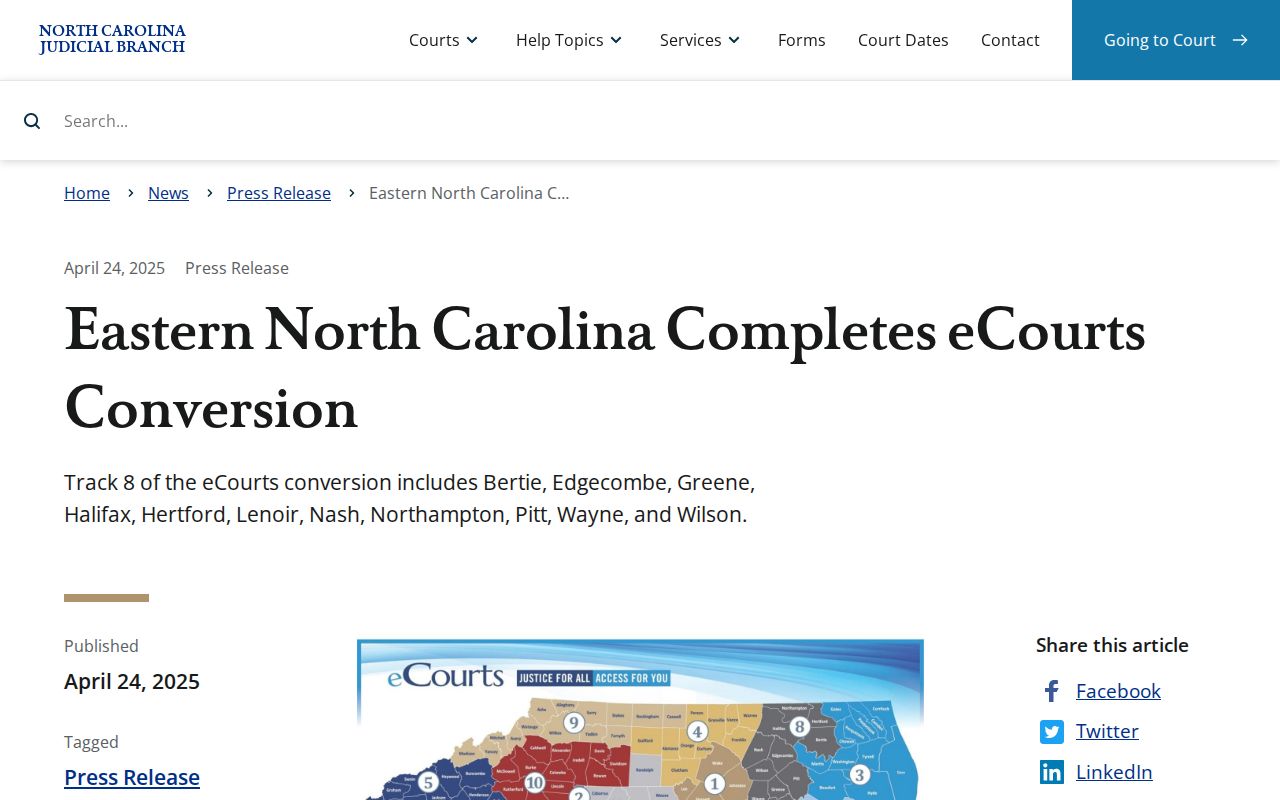
Statewide search is a real gain for Pitt County court records. But it is not a promise. Not every historical item reads like a live calendar. Check the event date and description yourself. For any hearing whose timing truly matters, have the Clerk of Superior Court confirm it. Track 8 training and transition information explains how the migration worked for counties in Pitt's group.
One more piece of history helps. The transition notice described a legacy-system period that was inquiry-only during the migration itself. That is context, not evidence of a delay today. It does explain why the late-April 2025 chronology on a Pitt County docket deserves a second look. The statewide eCourts completion announcement has the official wording.
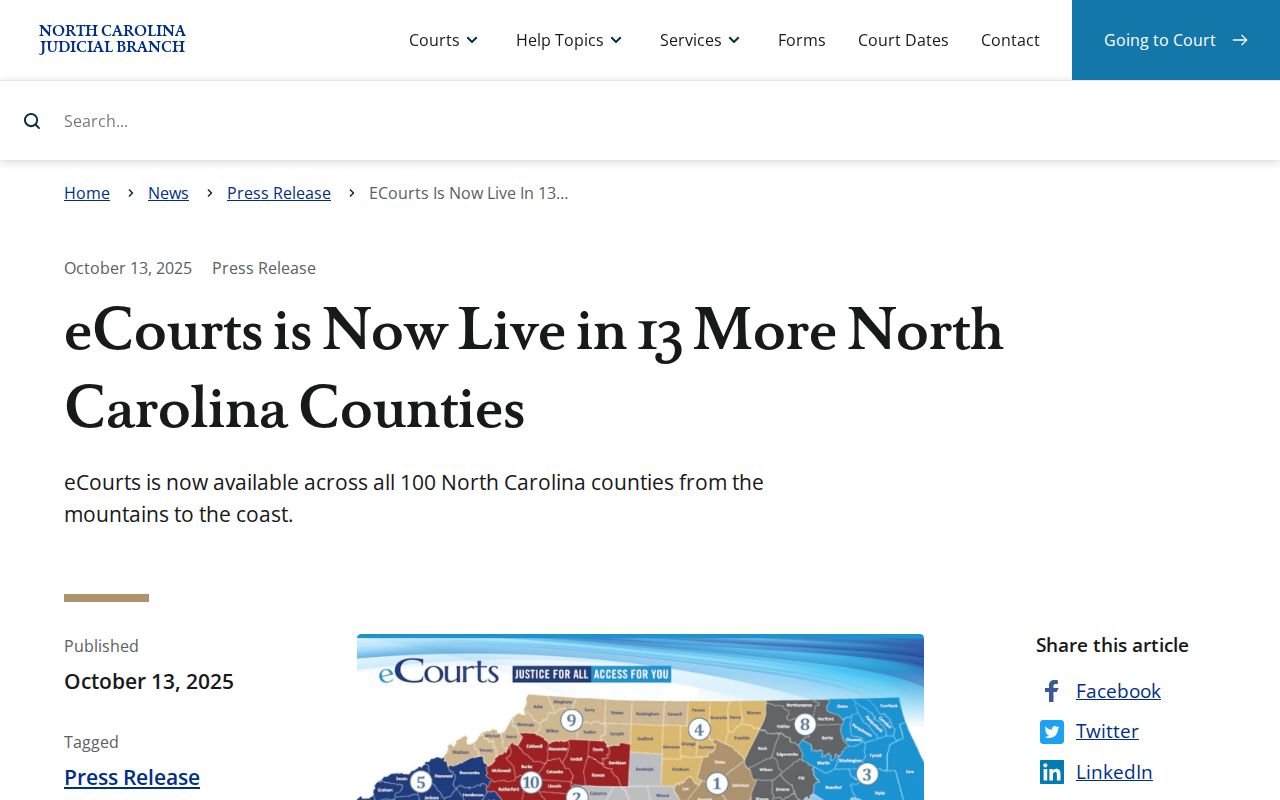
North Carolina finished its statewide rollout in 2025, so every county now sits on the same system. Even so, a Pitt County case lookup still means choosing the Pitt location, checking the local calendar, and getting Clerk confirmation when a hearing date truly matters.